[ Journal · The material ]
How to store beef tallow and how long it keeps
Beef tallow is one of the most stable fats available: its low polyunsaturated fatty acid content makes it highly resistant to oxidation. When stored properly, it lasts a year at room temperature and several years in the cold. Here are the actual shelf lives, the three enemies to avoid, and the signs that it has gone rancid.
How long does beef tallow last?
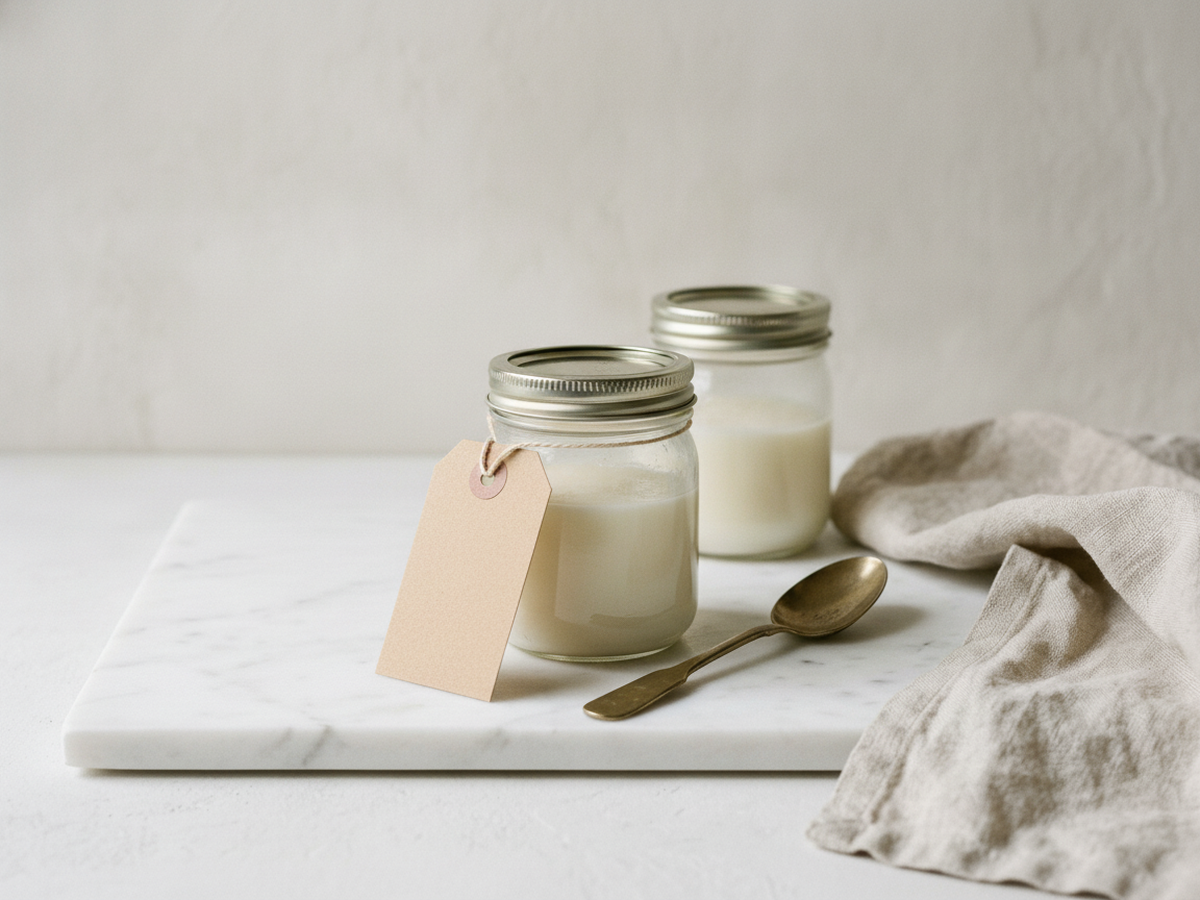
In short: about one year at room temperature, one to two years in the refrigerator, and well beyond that in the freezer.
| Conditions | Indicative duration | Note |
|---|---|---|
| Cupboard, airtight container, away from light | About 12 months | The most common case |
| Cupboard, open container or exposed to light | 3 to 6 months | Oxidation accelerates significantly |
| Refrigerator | 12 to 24 months | Becomes very hard; let it soften before use |
| Freezer | Several years | No noticeable loss of quality |
| Previously used frying oil | A few weeks | Food residues accelerate everything |
These durations apply to pure, well-filtered tallow. A cosmetic tallow balm follows a different logic: it is a finished product with its own period after opening indicated on the packaging, and often contains additional ingredients that modify the equation.
Why tallow keeps so well
It’s not a matter of tradition; it’s a matter of chemistry. A fat turns rancid when its double bonds react with oxygen. The more polyunsaturated fatty acids it contains—and thus the more double bonds—the faster it oxidizes.
Beef tallow contains only about 3 to 4% of these, compared to 60 to 70% for sunflower oil and about 68% for flaxseed oil.[1] This same property explains its performance in frying, a point developed in our smoke point comparison.
The three enemies of tallow
Air. Oxygen is what triggers rancidity. A tightly closed container, filled to the top to limit the air volume above, considerably slows the process.
Light. Ultraviolet rays accelerate oxidation. This is why fats are sold in amber glass or opaque containers rather than transparent glass. A jar left on a windowsill will age several times faster than the same jar in a cupboard.
Water. This is the most underestimated of the three, and the only one that poses a real microbiological problem. Pure fat contains no water, so nothing can grow in it. Introduce water, via damp fingers or a poorly dried spoon, and you create the conditions for local microbial growth. This is also why a water-free tallow balm does not need a preservative, as long as no water is introduced into it.
Heat also plays a role, but indirectly: it accelerates all of the reactions mentioned above. A cupboard above a stovetop is the worst possible place.
How to store beef tallow
- An airtight, opaque container. Amber glass, stoneware, or food-grade metal. Avoid thin plastic, which lets in some oxygen.
- A cool, dark place. A cupboard away from heat sources is sufficient in most homes.
- Dry utensils. Always scoop with a clean, dry spoon or dry fingers. This is the most important and most frequently forgotten rule.
- Fill the container. The less air left above the product, the longer it will last. Moving it to a smaller jar when there is only a little left is a good habit.
- Cold if you don't use it often. The refrigerator doubles the shelf life, and the freezer multiplies it. Just let it return to room temperature before use, as tallow becomes very hard when cold.
For a cosmetic balm, add one precaution: do not leave it in a bathroom where humidity rises with every shower. A bedroom or cupboard is more suitable. The application method is detailed in how to use beef tallow.
How to tell if tallow has gone bad
Rancidity is detected by smell long before it is seen. Four signs, from earliest to latest:
- The smell. A hint of paint, wet cardboard, or old nuts. Healthy tallow is almost odorless, with at most a slight, neutral fatty note.
- The taste, for edible tallow. Sharp, acrid, with a bitterness that lingers in the back of the throat.
- The color. A noticeable yellowing, or darker spots on the surface.
- The texture. A surface that becomes sticky or waxy rather than matte and firm.
An important point: visible mold is never normal on pure fat. It signals that water or residues have been introduced. In this case, throw it away; do not scrape it off.
To learn more
If you are looking for where to source tallow, our article on where to find beef fat details the supply chains and pricing. To understand the material itself, start with what is beef tallow, or browse the complete dossier.
And if you are looking for a short-ingredient tallow balm made in France: the Adepsia Balm, Origin Edition, 120 ml, four ingredients.
Frequently Asked Questions
How long does beef tallow last?
About twelve months at room temperature in an airtight, opaque container, twelve to twenty-four months in the refrigerator, and several years in the freezer. Its very low polyunsaturated fatty acid content, around 3 to 4%, makes it significantly more stable than most vegetable oils.
Should beef tallow be kept in the refrigerator?
It is not mandatory. A cool, dark, and dry cupboard is sufficient for use within a year. The refrigerator roughly doubles the shelf life, which is useful if you have a large quantity or use it rarely. It then becomes very hard and needs to reach room temperature before use.
Can you freeze beef tallow?
Yes, with no noticeable loss of quality, for several years. The most practical method is to freeze it in portions, for example in an ice cube tray, so you only take out the amount needed. Thawing is simply done at room temperature.
How do I know if beef tallow has expired?
The smell is the most reliable and earliest signal: a hint of paint, wet cardboard, or old nuts indicates rancidity. Next come a sharp taste, noticeable yellowing, and a surface that becomes sticky. Any visible mold means the product must be discarded.
Does a beef tallow balm need a preservative?
An anhydrous formula, meaning one without water, does not provide the environment necessary for microbial growth, which makes a preservative unnecessary as long as no water is introduced into the jar. This is precisely why you must scoop with dry fingers or a spatula.
This article is for informational purposes only. It does not constitute medical advice, food safety advice, or a guarantee of results. The durations indicated are orders of magnitude that vary according to the purity of the product and actual storage conditions. If you are in doubt about the condition of a product, do not use it.
- ANSES, Ciqual food nutritional composition table, for the fatty acid content of the cited fats.
- Codex Alimentarius, CODEX STAN 211-1999, Standard for named animal fats, which covers edible tallow.
- Regulation (EC) No 1223/2009 on cosmetic products, regarding the period after opening and the safety assessment of anhydrous formulas.
- The storage durations indicated are orders of magnitude derived from common practices for storing animal fats; they vary according to the purity of the batch and actual conditions.